The African Slave Trade was an extremely brutal thing for many Africans. Europeans set up ports at different places in Africa, and European sailors would bring goods to these ports in exchange for humans (PBS). The sailors would then sell the humans to American slave owners so they could provide labor on their fields and farms (PBS). The conditions for the Africans on the ships were absolutely terrible. There was limited space, and diseases spread quickly (PBS). A classmate said during the discussion, "The people were treated like animals." Sadly, I think that is a fair way of describing it. Many of the Africans died before they reached America on these ships (PBS).

The conditions on the plantations were usually very inhumane. The slaves often had to work very long hours and they often were treated with violence, such as being hit or whipped if they were not keeping up with the required "pace" of work (PBS). This was even the case on Thomas Jefferson's, one of America's presidents, plantations. I was somewhat surprised when I heard that Thomas Jefferson had slaves. Jefferson inherited slaves from his parents and owned a plantation called Monticello in Virginia (Jefferson and Slavery...). Jefferson however did not want his slaves to be treated brutally, but whenever he was gone from the plantation, his workers often went against his wishes (Jefferson and Slavery...). The African slaves often had to live in fear because they never knew what was going to be facing them in the upcoming days. As the relations between the white colonists and black Africans grew more tense, the colonists grew stronger in their oppression against the African slaves (PBS). There were times when some Africans would try to rebel, but they were often unsuccessful. The cruelty of the slaves had almost just become normal (PBS). Some of the colonies legalized killing and torturing slaves (PBS).

The lives of Africans slaves in early America were extremely difficult. They were shipped over to the new land in harsh conditions, and stepped onto land in conditions that were almost just as bad in some places. The slaves were beaten, lived in fear, and often did not get sufficient food and water. The relations between the white colonists and the slaves grew more and more bitter, and set off a racism trend that would continue for many years.
"Jefferson and Slavery at Monticello: Paradox of Liberty- Thomas Jefferson's Monticello." Thomas
Jeffersons Monticello Blog RSS. N.p., n.d. Web. 17 Feb. 2013.
PBS. PBS, n.d. Web. 17 Feb. 2013.

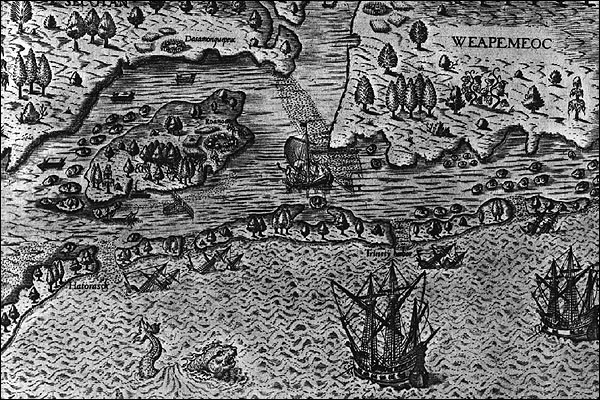

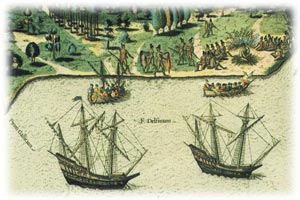 To begin with, there were some very apparent negative results for the Native Americans after the European colonists settled in the New World. The Europeans were colonizing the land. In class, I was asked what colonization meant, and I responded with, "Claiming new land and starting a civlization where no one has been before." Dr. Holden slightly corrected me by saying, "By claiming land that you don't AKNOWLEDGE where others have already settled." This statement is completely true about the Columbian exchange because the European settlers came and began to start their own civlizations and almost acted as if there was no one there in some areas, which was obviously very disrespectful to the Native Americans. Along with the disrespect, the Europeans also brought many diseases that turned out to be fatal for the native people. Diseases such as smallpox, influenza, and malaria killed many Native Americans and were devastating to their population ("The Columbian Biological Exchange"). The natives did not have any prior contact with these diseases, so their immune systems were not strong enough to handle them. The Europeans were also affected by disease, as they had never been exposed to some illnesses that the Native Americans passed on to them, such as syphilis ("The Columbian Biological Exchange"). The diseases were be far the most negative side effects of the Columbian exchange. However, there were also some positive things that came out of it.